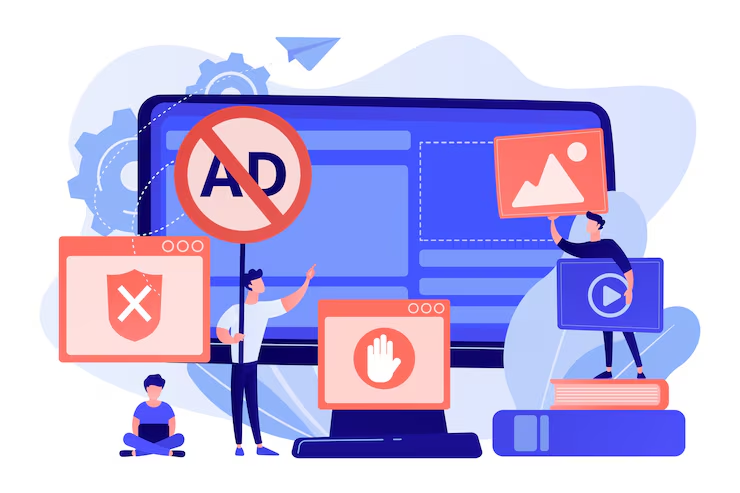
You’re reading an article online.
Suddenly a message appears:
“Please disable your ad blocker to continue.”
Many internet users find these messages annoying.
Others simply close the page and move on.
But have you ever wondered why websites ask for this?
The answer is actually quite simple.
Most websites need money to operate.
Servers cost money.
Writers need to be paid.
Developers maintain websites.
Editors review content.
Advertising helps cover these expenses.
Without some form of revenue, many websites would struggle to survive.
Understanding this relationship helps explain why ad blockers remain one of the most debated topics on the internet.
The Internet Isn’t Free to Run
When people visit a website, they often focus only on the content.
What they don’t see are the costs behind the scenes.
Website owners typically pay for:
- Hosting
- Domains
- Security services
- Content creation
- Technical maintenance
- Marketing
These expenses continue whether the website receives 100 visitors or 100,000 visitors.
Revenue is necessary to keep operations running.
Advertising Became the Most Common Solution
Many online publishers rely on advertising.
This model allows visitors to access content without direct payment.
Instead of charging readers, websites display advertisements.
When visitors view or interact with ads, publishers earn revenue.
This system helped create the modern internet economy.
Why People Use Ad Blockers
The popularity of ad blockers isn’t surprising.
Some websites display:
- Too many ads
- Pop-ups
- Auto-playing videos
- Distracting banners
These experiences can frustrate visitors.
As a result, many users install ad-blocking software to improve browsing.
The Problem for Publishers
From a user perspective, ad blockers improve convenience.
From a publisher perspective, they reduce income.
Imagine opening a restaurant where customers eat meals but never pay.
The business would struggle to survive.
Similarly, when large numbers of visitors block advertisements, website revenue declines.
For smaller publishers, the impact can be significant.
Why Some Websites Restrict Access
To address revenue loss, some publishers implement ad blocker detection.
When an ad blocker is detected, visitors may see:
- Warning messages
- Content restrictions
- Subscription offers
The goal isn’t necessarily to annoy users.
It’s an attempt to maintain financial sustainability.
Alternative Revenue Models
Not every website relies entirely on advertising.
Alternative approaches include:
Subscriptions
Readers pay for access.
Membership Programs
Supporters contribute regularly.
Affiliate Marketing
Publishers earn commissions through recommendations.
Digital Products
Courses, ebooks, and downloads generate income.
Many websites combine several methods.
The Balance Between Revenue and User Experience
Successful websites often focus on balance.
Too many advertisements create a poor experience.
Too few advertisements may reduce sustainability.
Finding the right balance is one of the biggest challenges for digital publishers.
Why This Matters for Bloggers
If you’re a blogger or website owner, understanding ad blockers is important.
Advertising often helps fund:
- Content creation
- Website growth
- Technical improvements
Without revenue, maintaining quality content becomes more difficult.
This is one reason many content creators encourage visitors to support websites they enjoy.
Conclusion
Websites ask visitors to disable ad blockers because advertising remains one of the primary ways online content is funded.
While ad blockers can improve browsing experiences, they also affect the revenue that publishers depend on.
The relationship between users and publishers isn’t always simple.
However, understanding how websites generate income provides valuable perspective on why these requests continue to appear across the internet.