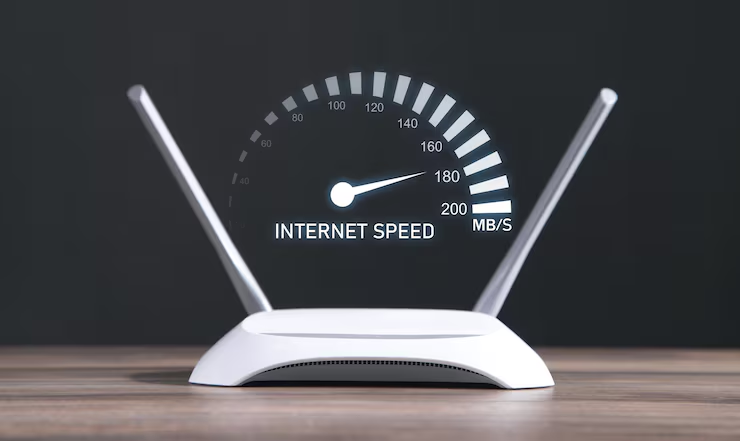
Internet providers love advertising bigger numbers.
100 Mbps.
300 Mbps.
500 Mbps.
1 Gbps.
Seeing these numbers often makes people believe faster is always necessary.
But is it?
Not necessarily.
Many households pay for internet speeds they never fully use.
The better question is:
“How much internet speed do I actually need for my daily activities?”
The answer depends more on usage than marketing.
Bigger Numbers Do Not Always Mean Better Experience
People often assume:
Higher speed = perfect internet
Reality is more complicated.
Internet quality also depends on:
- Router quality
- Device performance
- Network congestion
- Number of connected users
Speed is only one factor.
Basic Browsing Doesn’t Need Extremely High Speeds
Activities such as:
Reading articles
Checking emails
Online shopping
Social media scrolling
Usually require less bandwidth than many people imagine.
For individual users, even moderate internet plans often handle these tasks comfortably.
Streaming Changes the Requirements
Watching videos requires more data.
Especially:
HD content
4K streaming
Multiple devices streaming simultaneously
As video quality increases, internet demand increases too.
Work From Home Has Different Needs
Remote work often includes:
Video meetings
File uploads
Collaboration tools
The important factor here is consistency, not only speed.
A stable connection often matters more than extremely high Mbps.
Gaming Is About More Than Download Speed
This surprises many people.
Gamers often focus heavily on speed.
However, gaming performance can also depend on:
Latency
Server quality
Connection stability
Network congestion
A fast connection with poor stability may still create issues.
How Many Devices Use Your Internet?
Think about a modern household.
Phones.
Laptops.
Smart TVs.
Tablets.
Smart home devices.
Gaming consoles.
Several devices may share the same network simultaneously.
This affects internet requirements.
The Marketing Trap Many People Fall Into
Internet providers naturally promote higher-speed plans.
Many users assume they need the biggest package available.
Sometimes they do.
Often they don’t.
Understanding actual usage helps avoid overspending.
Final Thoughts
The ideal internet speed depends on how you use the internet.
For many households, stability, reliability and good WiFi coverage matter just as much as raw speed numbers.
Instead of chasing the highest Mbps available, focus on finding a plan that matches your real needs.