
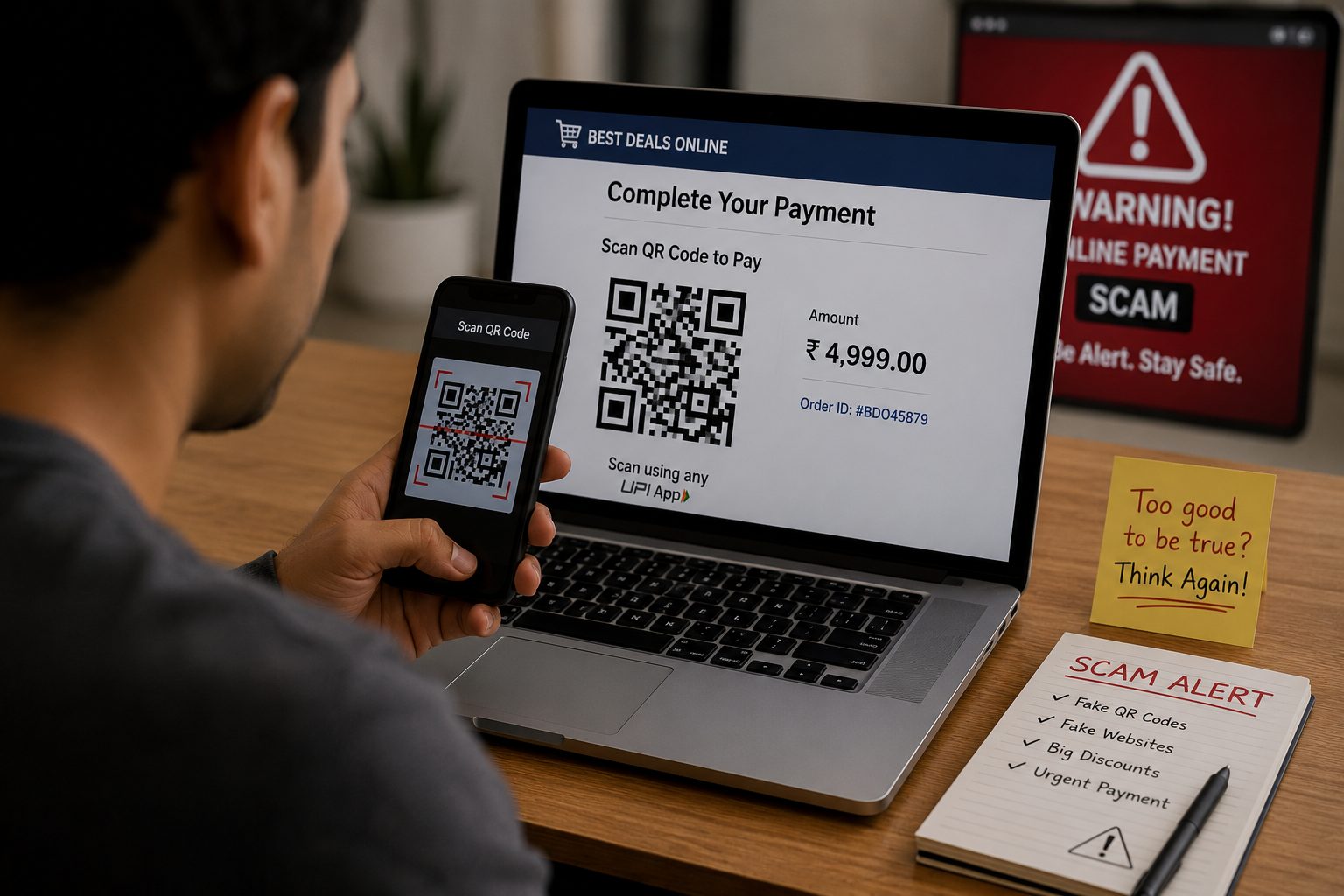
QR codes have become a normal part of daily life. We use them for payments, restaurant menus, event registrations, app downloads, and many other activities. While QR codes are convenient, scammers have started using them to trick people into sharing money and personal information.
Many users believe QR codes are always safe, but a fake QR code can redirect you to fraudulent websites, fake payment pages, or malicious downloads.
Understanding QR code scams can help you stay protected while making online payments and accessing digital services.
What Is a QR Code Scam?
A QR code scam occurs when fraudsters create or replace legitimate QR codes with fake ones.
When users scan these codes, they may be redirected to:
- Fake websites
- Fraudulent payment pages
- Malware downloads
- Phishing forms
The goal is usually to steal money or personal information.
How QR Code Scams Work
Scammers may:
- Place fake QR stickers over original codes
- Send QR codes through WhatsApp or SMS
- Share QR codes on social media
- Create fake payment requests
Victims often scan the code without verifying its source.
Common Types of QR Code Scams
Fake Payment QR Codes
Fraudsters replace merchant QR codes with their own.
As a result:
- Money goes to the scammer
- The merchant never receives payment
Fake Reward Scams
Users may receive messages claiming:
- Cashback rewards
- Lottery winnings
- Special offers
Scanning the QR code often leads to fraud.
Phishing QR Codes
Some QR codes redirect users to websites that request:
- Banking details
- Passwords
- OTP codes
- Personal information
These sites are designed to look genuine.
Warning Signs of QR Code Fraud
Watch for:
❌ QR code stickers placed over another code
❌ Unknown QR codes received via messages
❌ Requests for sensitive information
❌ Urgent payment demands
❌ Suspicious website links
Always verify before scanning.
Never Share OTPs
Scammers may attempt to collect:
- OTPs
- Banking PINs
- Debit card information
Remember:
✔ Genuine companies do not ask for OTPs through QR code pages.
Verify Merchant QR Codes
Before paying:
- Check the merchant name
- Confirm payment details
- Verify the amount
Small checks can prevent large losses.
Be Careful With Unknown Messages
Avoid scanning QR codes received from:
- Unknown contacts
- Suspicious emails
- Random social media posts
Always verify the sender.
Check Website URLs
After scanning a QR code:
Review:
- Website address
- Domain spelling
- Security indicators
A suspicious URL is often a warning sign.
What To Do If You Scan a Fake QR Code
If you suspect fraud:
- Stop entering information.
- Close the website.
- Change affected passwords.
- Contact your bank if payment details were entered.
- Monitor account activity.
Quick action can reduce damage.
Safety Tips for QR Code Payments
Helpful habits include:
✔ Verify payment details
✔ Use trusted payment apps
✔ Avoid unknown QR codes
✔ Double-check merchant information
✔ Stay informed about scams
Using QR Codes Safely
QR codes are useful tools, but they can also be exploited by cybercriminals. Understanding how QR code scams work and verifying payment details before scanning can help protect your finances and personal information.
A few extra seconds of caution can prevent significant financial and security problems.


