The internet has made our lives easier—but it has also opened doors for cybercriminals.
In 2026, online scams are more advanced than ever. From fake websites to AI-powered fraud calls, scammers are using smart techniques to steal money, data, and identity.
Whether you:
- Shop online
- Use social media
- Do online banking
- Work remotely
👉 You are a potential target.
This guide will teach you:
- Types of online scams
- How scammers trick people
- Step-by-step protection methods
- Tools and best practices
- What to do if you get scammed
🚨 What is an Online Scam?
An online scam is a fraud where criminals use the internet to:
- Steal money 💸
- Collect personal data 📄
- Hack accounts 🔓
👉 Goal: Exploit trust and lack of awareness
⚠️ Why Online Scams Are Increasing in 2026
✔️ More internet users
✔️ Digital payments growth
✔️ AI-generated fake content
✔️ Lack of awareness
👉 Scammers are becoming smarter.
🔍 Most Common Types of Online Scams
1. 🎣 Phishing Scams
Fake emails or messages that look real.
🔹 Example:
You get an email from
👉 PayPal
asking you to “verify account”
👉 You click → enter details → account hacked
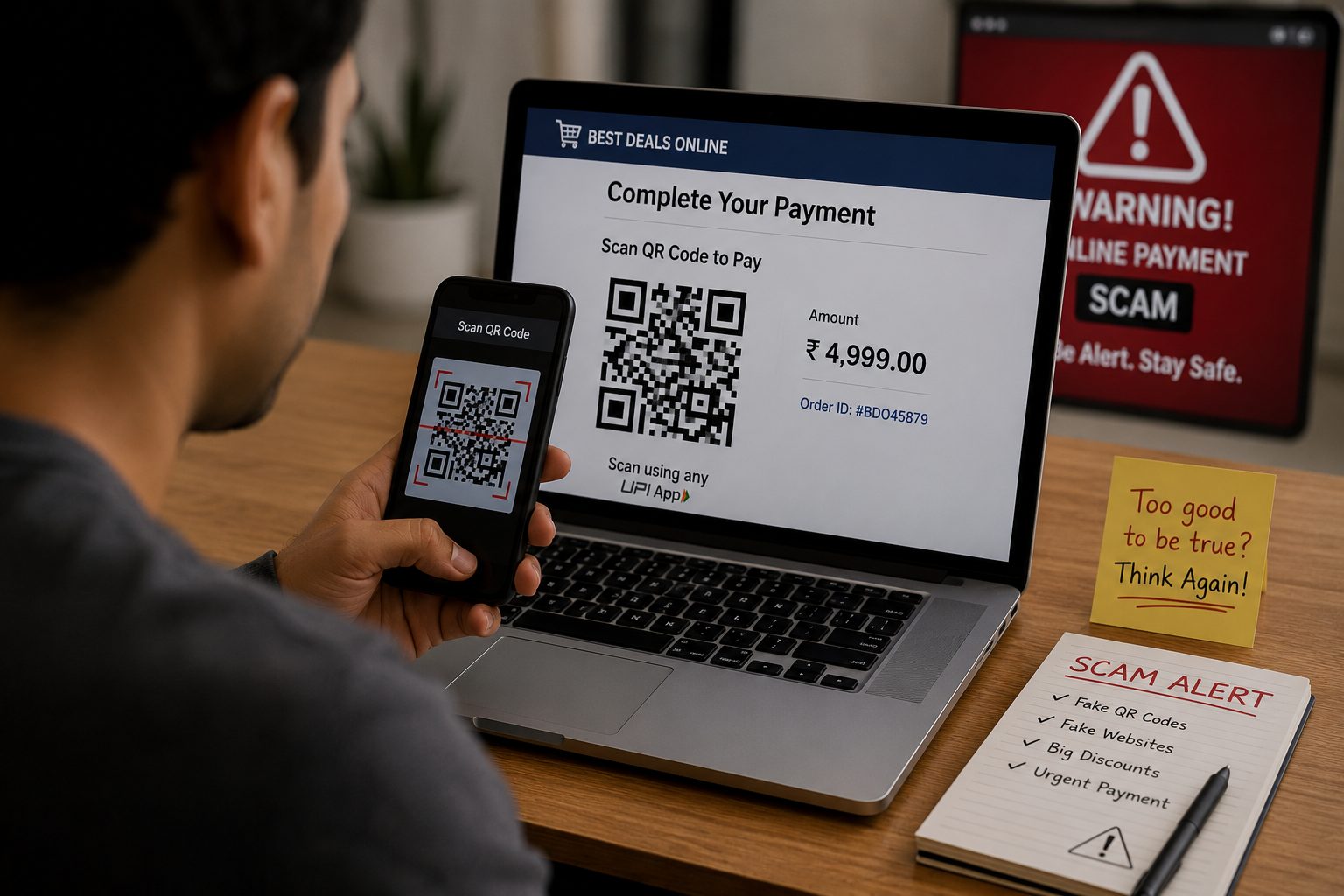
2. 🛒 Fake E-commerce Websites
Sites that look like real brands.
🔹 Example:
Fake version of
👉 Amazon
👉 You pay → product never arrives
3. 📱 OTP & Bank Fraud
Scammers call pretending to be bank staff.
👉 Ask for OTP → steal money
4. 💼 Job Scams
Fake job offers asking for registration fees.
5. 💔 Romance Scams
Fake relationships → emotional manipulation → money demand
6. 📲 Social Media Scams
- Fake giveaways
- Hacked accounts
- Impersonation
7. 🤖 AI Voice & Deepfake Scams
New in 2026:
👉 Fake voice calls using AI
🧠 How Scammers Trick People (Psychology)
🔥 Common tactics:
- Urgency (“Act now!”)
- Fear (“Your account will be blocked”)
- Greed (“You won lottery”)
- Trust (“I am from bank”)
👉 They play with emotions, not logic.
🛡️ 15 Powerful Ways to Protect Yourself
1. 🔒 Never Share OTP or Password
👉 No bank asks for OTP
2. 🌐 Check Website URL Carefully
Look for:
- HTTPS
- Correct spelling
3. 📧 Verify Emails
Check sender email address
4. 🔐 Use Strong Passwords
Mix:
- Letters
- Numbers
- Symbols
5. 🔁 Enable 2-Factor Authentication
Extra layer of security
6. 📱 Don’t Click Unknown Links
Especially from SMS or WhatsApp
7. 🛡️ Use Antivirus Software
Protect devices from malware
8. 📲 Avoid Public Wi-Fi for Banking
Hackers can access data
9. 💳 Use Secure Payment Methods
Prefer trusted platforms
10. 🔍 Check Reviews Before Buying
Avoid fake websites
11. 📵 Don’t Share Personal Info
Keep details private
12. 📊 Monitor Bank Statements
Check for suspicious transactions
13. 🚫 Ignore Too-Good-To-Be-True Offers
If it sounds fake → it is
14. 📢 Report Suspicious Activity
Inform authorities
15. 🧠 Stay Updated
Awareness = protection
🧰 Useful Security Tools
🔹 Password Manager
- LastPass
🔹 Antivirus
- Quick Heal
- Kaspersky
🔹 Browser Safety
- Google Chrome
🚨 What to Do If You Get Scammed
Step 1: Contact Bank Immediately
Block account
Step 2: Change Passwords
Secure accounts
Step 3: Report to Cyber Crime
👉 India official portal:
- Cyber Crime Portal India
Step 4: File FIR
Step 5: Inform Others
📊 Real Example
User received fake call:
- Shared OTP
- Lost ₹50,000
👉 Lesson:
Never trust unknown calls
🧠 Advanced Security Tips
✔️ Use VPN
✔️ Avoid unknown apps
✔️ Keep software updated
✔️ Use separate email for banking
📈 Future of Online Security
- AI-based protection
- Biometric security
- Stronger regulations
❌ Common Mistakes
- ❌ Blind trust
- ❌ Clicking random links
- ❌ Weak passwords
- ❌ Ignoring warnings
🏁 Conclusion
Online scams are increasing—but so is awareness.
👉 Stay alert
👉 Stay informed
👉 Stay safe
Your security is in your hands.