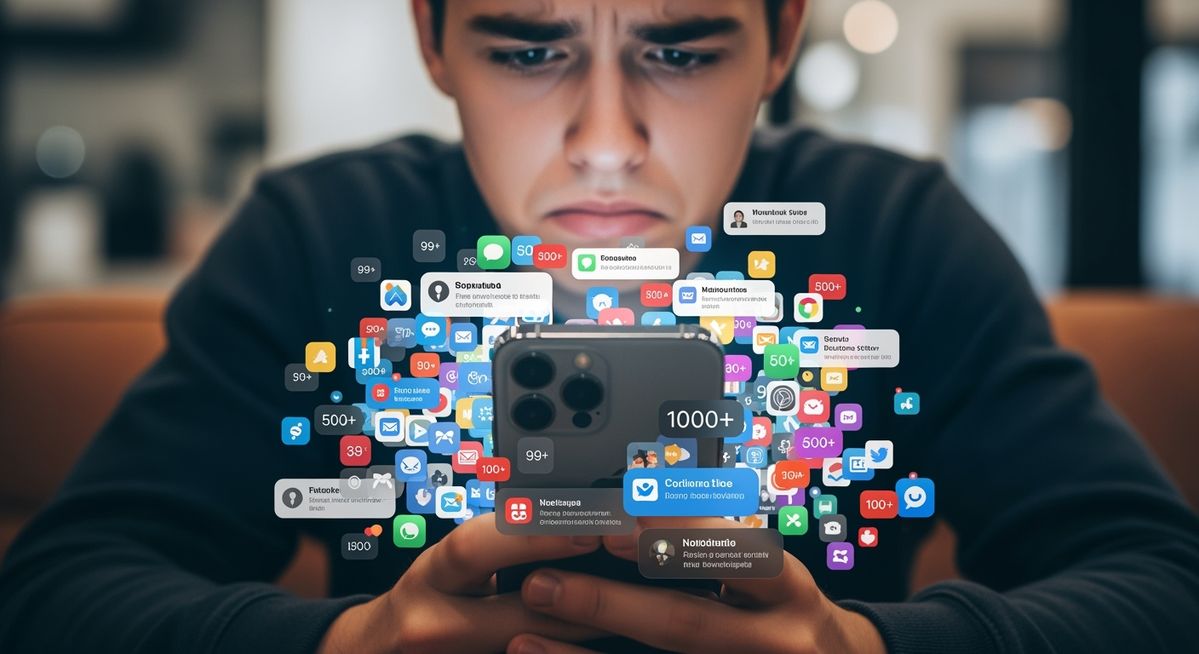
A few years ago, life was much quieter.
If someone wanted to contact you, they usually had to call, send a text message, or wait until they met you in person. Today, things are very different. Our phones constantly buzz, ring, vibrate, and display alerts from dozens of apps. Social media notifications, shopping offers, banking alerts, news updates, emails, messages, and reminders compete for our attention every single day.
Most people don’t realize how much notifications have changed their daily behavior. What started as a helpful feature has slowly become one of the biggest influences on how we focus, work, communicate, and spend our time.
Notifications are now so deeply integrated into modern life that many people feel uncomfortable when they don’t receive them. Some even check their phones without hearing a sound or feeling a vibration. This shows just how powerful these tiny digital interruptions have become.
The Original Purpose of Notifications
When smartphones first became popular, notifications had a simple purpose.
They were designed to help users stay informed about important events such as:
- Incoming calls
- Text messages
- Calendar reminders
- Important emails
The goal was convenience.
Instead of opening apps repeatedly, users could receive important information instantly.
In the beginning, notifications genuinely solved a problem.
They saved time and helped people stay connected.
The Notification Explosion
As smartphone apps became more advanced, companies realized something important:
The more often users opened an app, the more time they spent using it.
This created a race for attention.
Suddenly, every app wanted to send notifications.
Today, a typical smartphone may receive alerts from:
- Social media apps
- News platforms
- Online shopping apps
- Food delivery services
- Banking applications
- Games
- Streaming platforms
Each notification competes for the same limited resource: your attention.
Why Notifications Are So Hard to Ignore
Human brains are naturally curious.
When we hear a sound or see a notification badge, our minds immediately wonder:
- Who sent it?
- Is it important?
- Did someone message me?
- Am I missing something?
This curiosity creates a strong urge to check the device.
Even when the notification turns out to be unimportant, the habit remains.
Over time, checking notifications becomes automatic behavior.
Many people unlock their phones dozens or even hundreds of times each day without consciously deciding to do so.
How Notifications Affect Focus
One of the biggest consequences of constant notifications is reduced focus.
Imagine you’re working on an important task.
You’re fully concentrated.
Then your phone vibrates.
You glance at the screen.
The interruption lasts only a few seconds.
However, your brain now needs time to return to the previous level of concentration.
Researchers often refer to this as an “attention switch.”
Each switch may seem small, but repeated interruptions throughout the day can significantly affect productivity.
Notifications and Productivity
Many people believe they are good at multitasking.
In reality, the human brain generally performs better when focusing on one task at a time.
Frequent notifications can cause:
- Reduced concentration
- Increased mistakes
- Longer completion times
- Mental fatigue
This is one reason why many professionals disable non-essential notifications while working.
Protecting attention has become increasingly important in the digital age.
The Psychological Reward System
Notifications often create small moments of anticipation.
A message.
A like.
A comment.
A new follower.
These interactions can feel rewarding.
As a result, users may begin checking their devices more frequently.
This doesn’t mean notifications are inherently harmful.
However, it helps explain why they can become difficult to ignore.
Technology companies understand that engagement increases when users regularly interact with their platforms.
The Positive Side of Notifications
While notifications are often criticized, they also provide real benefits.
They help people:
- Stay connected with family
- Receive emergency alerts
- Remember appointments
- Track deliveries
- Monitor finances
- Manage work responsibilities
Without notifications, many modern digital services would be far less convenient.
The challenge isn’t notifications themselves.
The challenge is managing them effectively.
How People Are Taking Back Control
Many users are becoming more aware of their digital habits.
As a result, they are making changes such as:
- Disabling unnecessary alerts
- Using focus modes
- Setting app limits
- Scheduling notification summaries
These strategies help reduce distractions without eliminating useful information.
Attention Has Become a Valuable Resource
In today’s digital world, attention is incredibly valuable.
Businesses compete for it.
Apps compete for it.
Websites compete for it.
Every notification is essentially a request for a small portion of your time and focus.
Understanding this helps people make more intentional decisions about how they use technology.
Living With Notifications Instead of Serving Them
Notifications are unlikely to disappear anytime soon.
In fact, they may become even more sophisticated as technology evolves.
The key is finding balance.
Notifications should serve users, not control them.
By understanding how they influence behavior and attention, people can use technology more consciously while still enjoying its benefits.