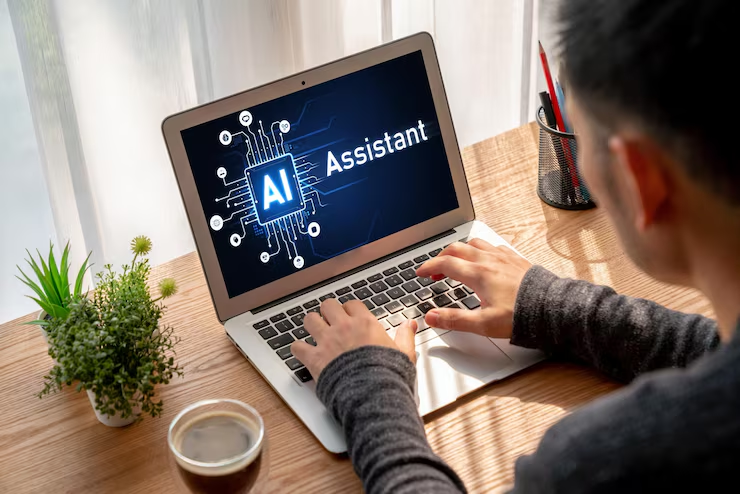
When people hear the word Artificial Intelligence, many imagine robots, futuristic machines, or complex software.
Reality is often less dramatic.
AI quietly appears in everyday tools many users already depend on.
Sometimes without noticing.
The interesting part is:
People may interact with AI regularly while rarely thinking about it.
Navigation Apps and Route Suggestions
Suppose you open a map application.
The app estimates travel time.
Suggests routes.
Warns about traffic.
These experiences often rely on analysing patterns and large amounts of information.
Users simply see convenience.
Recommendation Systems on Streaming Platforms
Ever noticed:
Videos suggested after watching content?
Music recommendations?
Shows matching previous interests?
Personalised suggestions have become common.
Different systems influence these experiences.
Search Engines Try Understanding Intent
Search results evolved over time.
People ask broader questions now.
Systems attempt understanding meaning rather than matching exact words only.
Users experience this as improved convenience.
Spam Filters in Email
Interesting example:
Many unwanted emails never appear prominently.
Filtering systems continuously evaluate patterns.
Users benefit without thinking much about the process.
Photo Organisation on Phones
Some phones automatically group:
Places
Dates
People
Memories
These features simplify organisation.
Again—technology works quietly in the background.
Translation Tools Improved Significantly
Language tools have changed rapidly.
People translate messages, websites, or documents more easily than before.
Why AI Often Feels Invisible
This is interesting.
People notice technology more when it appears new.
Once convenience becomes normal, attention decreases.
AI often blends into routines.
Does Everyday AI Mean Everything Is Automated?
Not necessarily.
Technology support differs from complete replacement.
Human decisions still matter in many areas.
Final Thoughts
Artificial Intelligence sometimes sounds distant or futuristic.
In practice, many users already interact with AI-supported systems through navigation, recommendations, search, filtering, and other everyday experiences.
Understanding this changes perspective slightly:
Technology is not only something arriving in the future.
Often, it already exists quietly within daily habits.