Almost every laptop user has experienced this at some point.
Your device works normally for months.
Then an update arrives.
You install it.
Restart the laptop.
A few days later, things begin feeling different.
Apps open slower.
Startup takes longer.
The fan runs more often.
The system feels heavier than before.
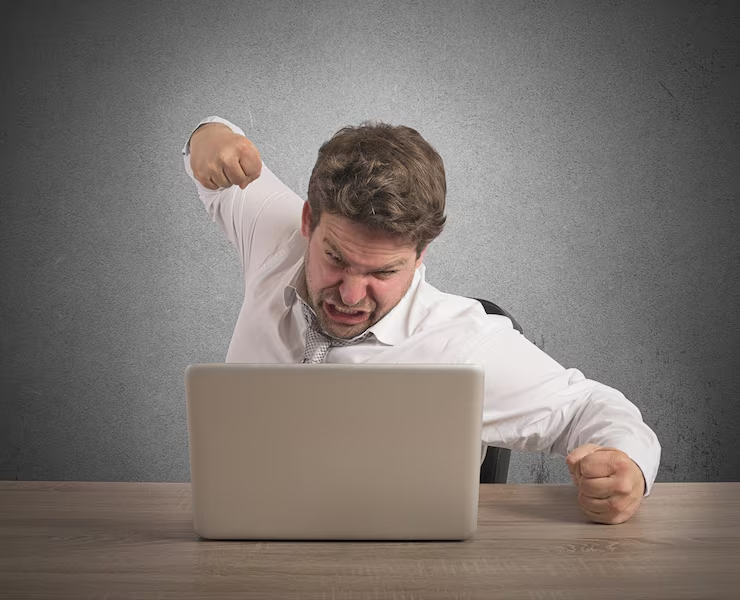
At that point many users think:
“The update ruined my laptop.”
But is the update always the real reason?
Not necessarily.
The explanation is often more complicated.
Updates sometimes change performance expectations, add features, improve security, or increase background activity. In some cases, the issue comes from older hardware struggling with newer requirements. In others, the update is not the problem at all.
Understanding possible reasons helps more than assuming every slowdown has one cause.
Updates Usually Do More Than Add Features
Many people think updates only change appearance or introduce small improvements.
Actually, updates may include:
Security improvements
Compatibility changes
Bug fixes
New background processes
System adjustments
These changes influence how devices behave.
Older Laptops Handle New Requirements Differently
Imagine using a laptop for several years.
During that time:
Software becomes heavier
Browsers change
Apps evolve
User habits change
Storage fills
Workload increases
The laptop today may handle more than it did originally.
Updates sometimes make these differences more noticeable.
Storage Space Affects Performance Too
Nearly full storage can influence:
Temporary files
System processes
Updates
General responsiveness
Users often save:
Downloads
Videos
Screenshots
Old files
Unused software
Gradually storage pressure increases.
Background Programs Quietly Grow Over Time
Laptops collect software.
Some applications start automatically.
Users may not realise how many programs run in the background.
More background activity can influence experience.
Heat and Dust Also Affect Long-Term Performance
Interesting thing:
Performance discussions often ignore physical maintenance.
Dust accumulation and heating may influence efficiency over time.
Technology changes.
Hardware ages.
Environment matters too.
Practical Habits That May Help
Simple actions:
✔ Review storage
✔ Remove unused software
✔ Restart occasionally
✔ Check startup applications
✔ Update important programs
Small habits often improve long-term experience.
Final Thoughts
Laptop slowdowns after updates do happen, but updates alone do not always explain everything.
Performance usually reflects several factors working together.
Understanding those factors helps users troubleshoot more realistically instead of assuming every problem has one obvious cause.