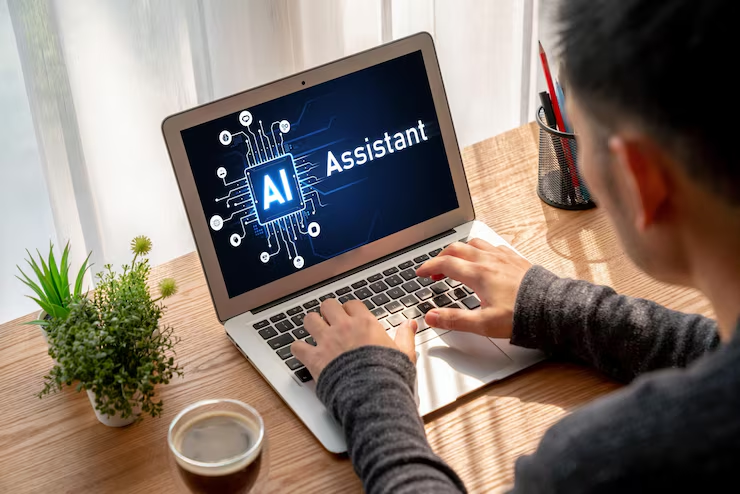
A few years ago, students mostly used the internet to search for answers, watch YouTube tutorials, or download notes before exams. Now the way many people study has changed. AI tools have slowly become part of everyday learning. Some students use them for understanding difficult concepts, some for summarising chapters, while others use them for coding help, writing improvement, or organising study plans.
Because AI became popular so quickly, opinions are mixed. Some believe AI is making learning easier and saving time. Others think students are becoming too dependent on tools and losing problem-solving skills.
The truth is somewhere in the middle.
AI itself is not good or bad. The difference usually comes from how people use it.
Why Students Started Using AI More Frequently
The biggest reason is simple: speed.
Suppose a student spends 40 minutes reading a chapter and still feels confused. An AI explanation in easier language may help them understand faster.
Students commonly use AI for:
- Explaining difficult topics in simpler words
- Creating short notes from long chapters
- Understanding coding errors
- Improving grammar or writing clarity
- Generating practice questions
- Planning study schedules
For beginners learning technical subjects, this often feels helpful.
A student learning Java programming, for example, may struggle with errors that look confusing. Instead of searching different websites for hours, AI can explain what the issue means.
That convenience explains why usage keeps increasing.
But Faster Answers Don’t Always Mean Better Learning
There is an important difference between:
Using AI to understand something
and
Using AI to avoid understanding something
Those two habits create different results over time.
If someone depends on AI for every answer without trying first, learning may become weaker. Information arrives quickly, but deeper understanding may not improve.
This isn’t only about AI.
The same thing happens with copied homework or shortcuts.
Real learning often includes confusion before clarity.
Skills Students Should Still Develop Without Depending Entirely on AI
Technology changes continuously, but some abilities remain valuable:
- Critical thinking
- Writing independently
- Research skills
- Decision making
- Problem solving
Tools may evolve.
Thinking ability remains useful.
Final Thoughts
AI will likely remain part of education for years. Ignoring it completely may not help. Depending on it for everything may also create problems.
The stronger approach is balance:
Use tools when they save time.
Keep learning where understanding matters.
Students who combine curiosity with technology may benefit more than those relying only on shortcuts.