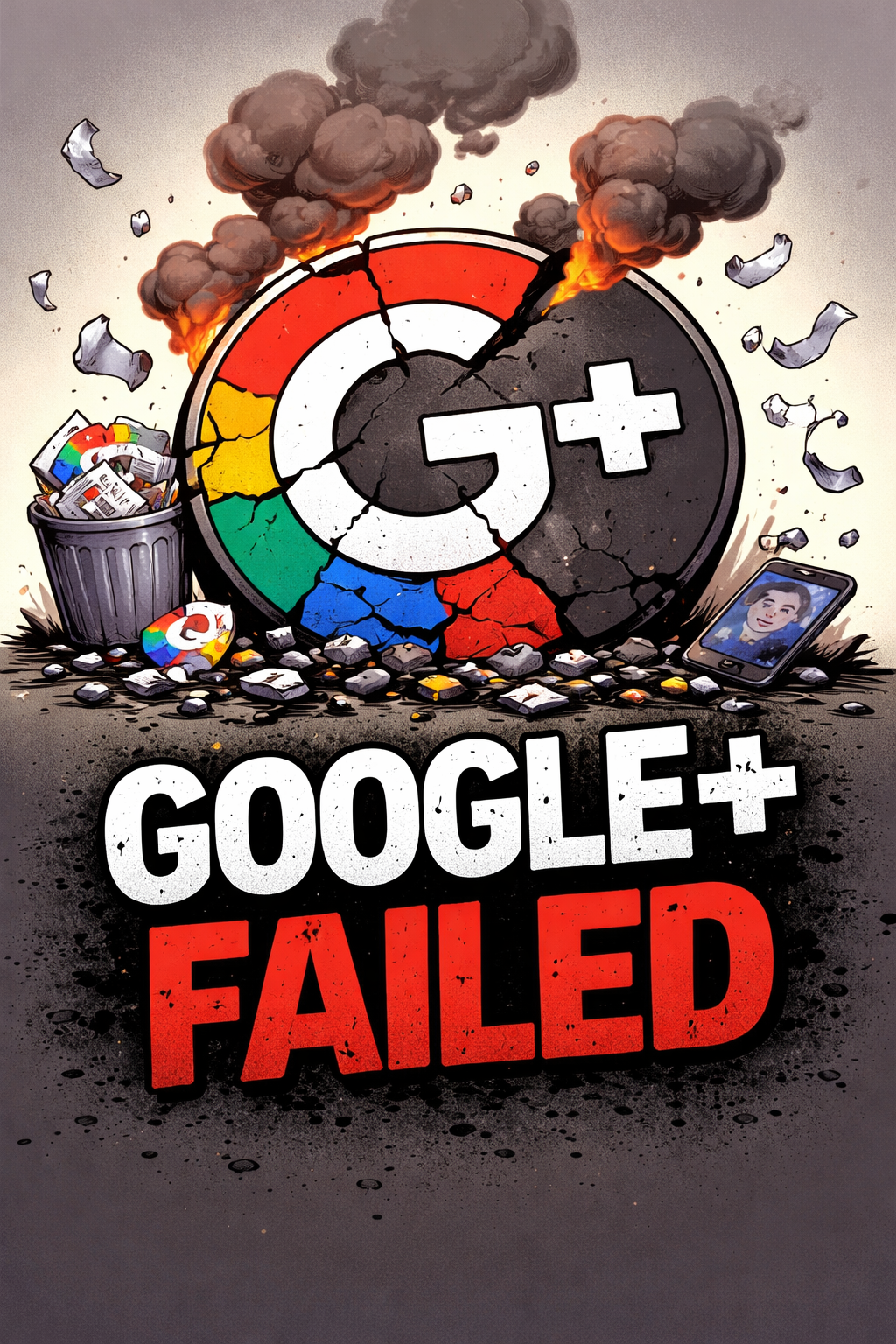
Google Plus was once seen as a strong competitor to Facebook and Twitter. Launched in 2011, it gained millions of users quickly—but still failed and officially shut down in 2019.
So what went wrong? Let’s break it down in detail.
🚀 What Was Google Plus?
Google Plus was a social networking platform that allowed users to:
- Share posts, photos, and videos
- Connect with people
- Join communities
- Use features like Circles and Hangouts
It was designed as a complete social ecosystem connected with Google services like YouTube and Gmail.
❌ Top Reasons Why Google Plus Failed
1. Lack of User Engagement
Even though millions signed up, very few users were active. Reports showed that most sessions lasted only a few seconds.
2. Too Late in the Market
By the time Google Plus launched:
- Facebook was already dominant
- Twitter was growing rapidly
Users had no strong reason to switch.
3. Forced Integration with Google Services
Google forced users to create Google Plus accounts for services like YouTube.
👉 This created frustration instead of adoption.
4. Confusing Features (Circles System)
Google introduced “Circles” to organize contacts, but many users found it complicated compared to simple friend lists.
5. Privacy Issues
Earlier Google social products faced privacy concerns, and users were already cautious.
6. Weak Unique Value
Google Plus tried to combine features of:
- Other platforms
But it didn’t offer anything truly unique.
7. Security Issues & Data Leak
A major data vulnerability exposed user data, which accelerated its shutdown.
🧠 Lessons for Social Media Platforms
💡 1. User Experience is Everything
Simple platforms win over complex ones.
💡 2. Don’t Force Users
Adoption should be organic, not forced.
💡 3. Innovation Must Be Clear
Users need a strong reason to switch platforms.
💡 4. Privacy is Critical
Trust is more important than features.